White Cloud Gallery
Elevating Transitional Space
Elevating Transitional Space
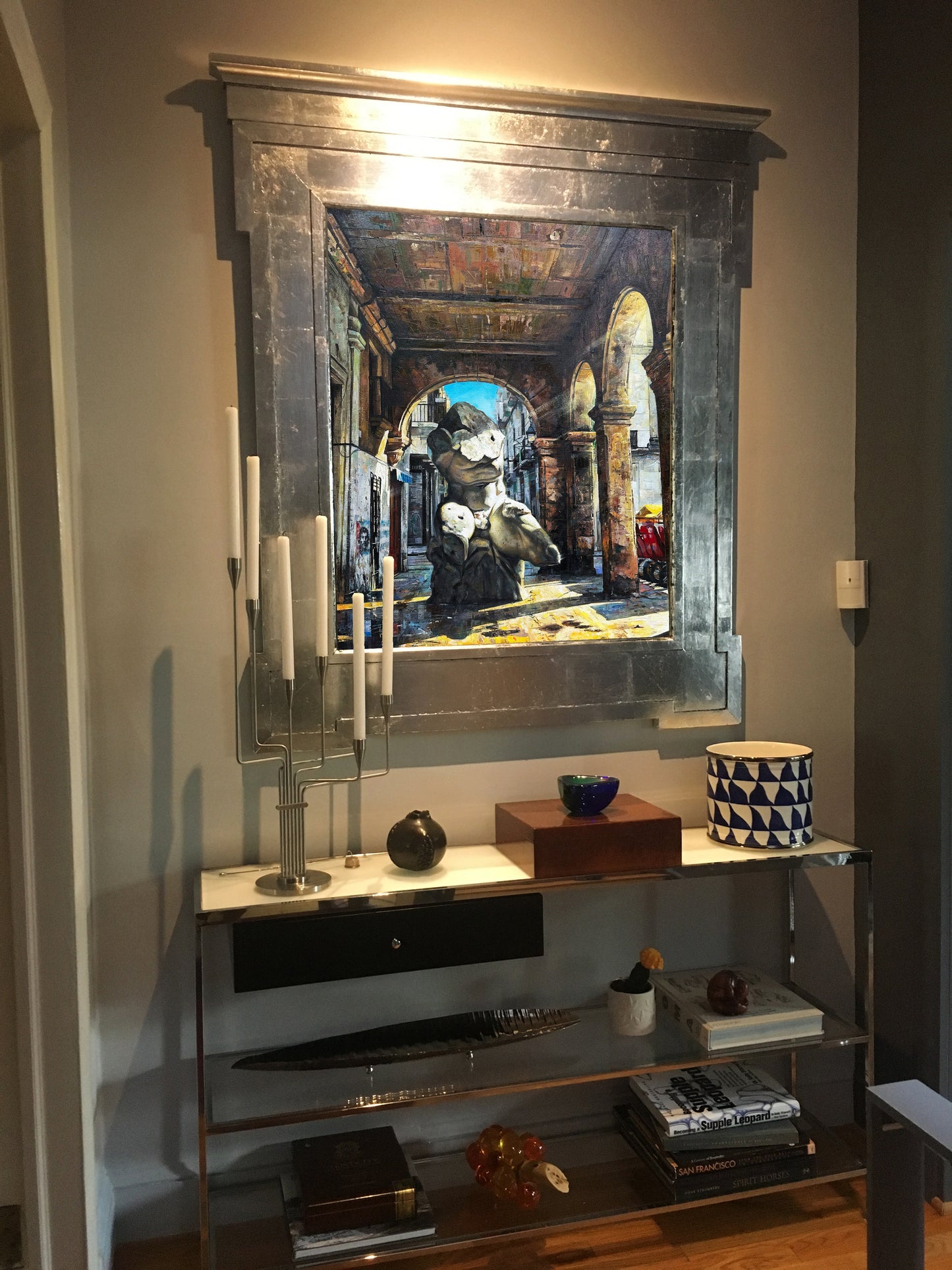
This stair landing has been transformed into a highly intentional, gallery-like moment, where a space of circulation becomes one of pause and contemplation rather than mere passage. The painting stands as the unquestioned anchor of the composition. Its architectural arches and weathered classical figure introduce an immediate sense of depth—amplified by rich, painterly textures and a luminous sky that draws the eye inward. The focal point is deliberately placed beyond the physical boundaries of the landing, visually expanding what would otherwise feel flat and narrow, and giving the stairwell a sense of spatial release.
Framed within the existing substantial silver-leaf frame, the artwork gains permanence and monumentality, reading almost as a built-in architectural element rather than a hung piece. The frame acts as a threshold—a portal—reinforcing the painting’s dialogue between interior space and imagined depth.
The palette of warm stone tones, ochres, and muted blues sets the emotional register for the entire scene. These hues are subtly echoed by the neutral wall color and reflective metal finishes, allowing the artwork to remain dominant without visual competition. Nothing detracts; everything supports.
Below, the sleek glass and metal console is a masterful choice for such a compact area. Its transparency preserves openness and light flow, ensuring the landing feels elevated rather than crowded. Objects are curated with precision: sculptural candleholders introduce vertical rhythm, while ceramic vessels and carefully stacked books add warmth, texture, and intellectual weight—each element contributing without challenging the primacy of the artwork above. Nothing feels accidental; every piece feels chosen.
What makes this space exceptional is how fully its potential is realized. The stair landing becomes a vertical gallery wall—a moment of aesthetic arrest within movement. Rather than minimizing the space, the design amplifies it, using art, reflection, and restraint to create a sense of ceremony. The result is elevated, cultured, and quietly dramatic: a compelling example of how thoughtful curation can transform transitional architecture into a true experience.
Share